Production
The broadest shelf we've got. Interfaces and mic technique, synthesis from the oscillators up, mixing from the first fader move - and, once it's finished, what to do about publishing.
35 articles
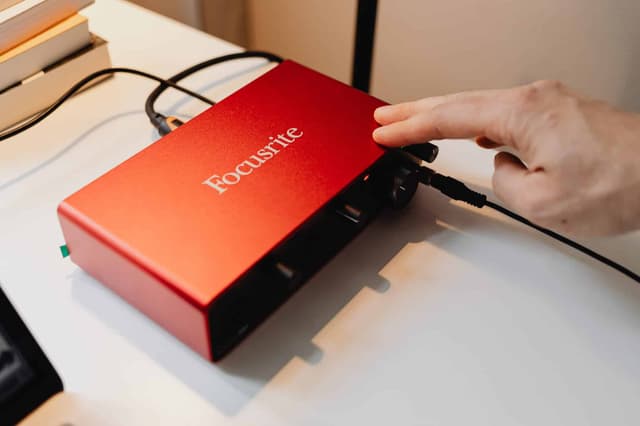
Audio Interfaces
Audio Interfaces An audio interface is a piece of hardware that connects musical instruments, microphones, and other sound sources to a computer. The audio interface acts as a bridge between the analog audio signals from the instruments and the digital signals that the computer can understand and pr
Read →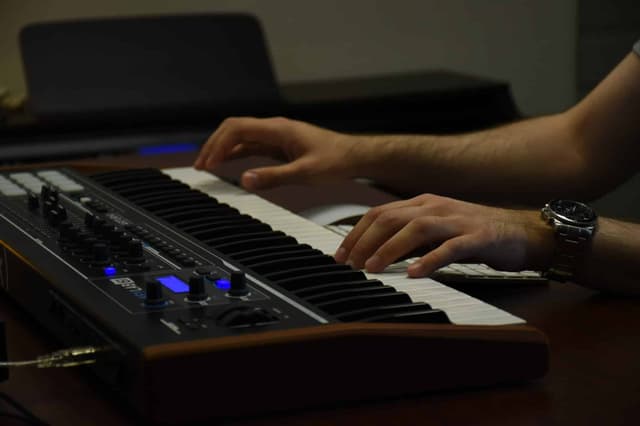
What Are MIDI Interfaces?
All about MIDI The MIDI (Musical Instrument Digital Interface) standard has had a profound impact on the music industry since its introduction in the early 1980s. MIDI allows electronic musical instruments, computers, and other digital equipment to communicate with each other, allowing for the creat
Read →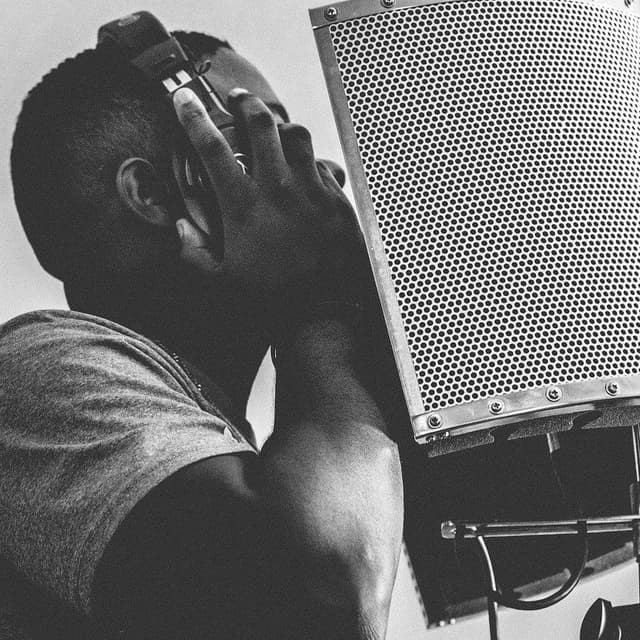
How to Record Vocals When Producing A Singer - Vocal Production
How to Record Vocals When Producing A Singer - Vocal Production By Chris Porter Firstly, let’s explode the myth that vocals are anything other than another instrument, or colour (depending on how you like to view things!) that you use to build up a musical picture. Yes, they convey language as well
Read →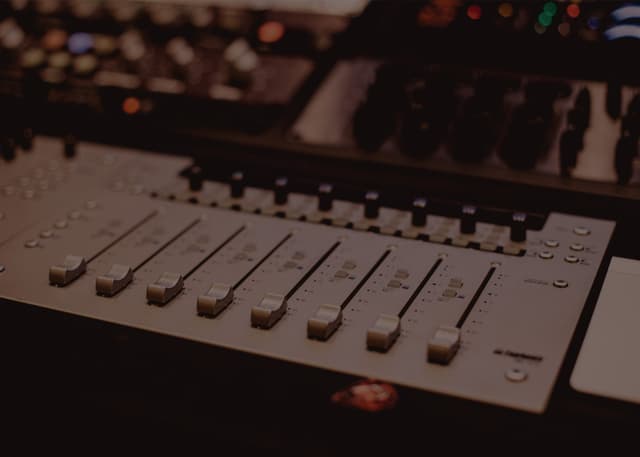
What does a music producer do?
by Chris Porter It would be easy to write an entire article arguing about exactly what this question means, but the simplest answer (and the truth of the matter) lies behind the scenes - of whatever parameters the interested parties have agreed to. Allow me to explain… In today’s world of music crea
Read →
4 Core Principles of Music Production for Beginners
Music is a powerful medium of communication. As Shakespeare himself asserted “When words fail, music speaks”. Technically speaking, the music or the songs that we hear comprise of two basic parts: the instruments (guitar, violin, piano, drums etc) and the vocals which are collectively known as ‘Trac
Read →
Creative Uses for Melodyne
Celemony's Melodyne is a highly sophisticated pitch analysis and correction software suite known mainly for its use in tuning vocals. As effective as it is in this capacity, Melodyne's capabilities allow for a range of other creative uses outside of simply correcting mistakes in performance. In this
Read →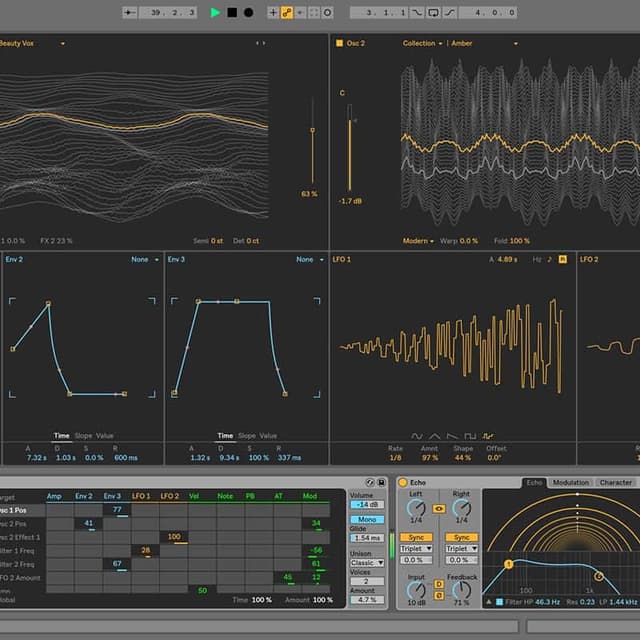
Sound Design with Macro Variations in Live 11
By Heinrich Zwahlen The ability to store the state of Macro Controls as preset variations in Racks has drastically increased the functionality of these already...
Read →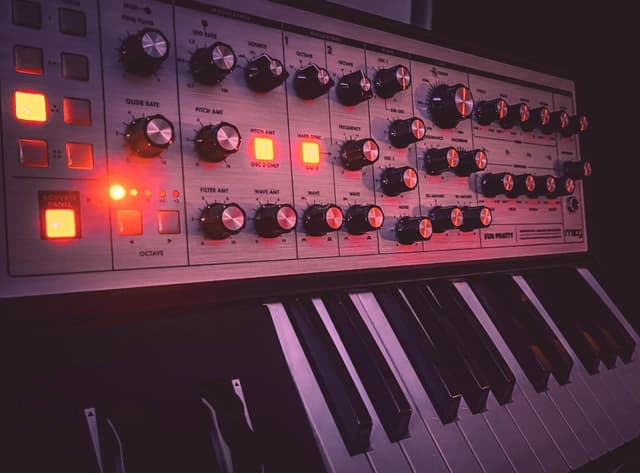
What Is a Synthesiser?
Part one of our subtractive synthesis series: what a synthesiser actually is, how it differs from an acoustic instrument, and how synths travelled from analog to digital and back again.
Read →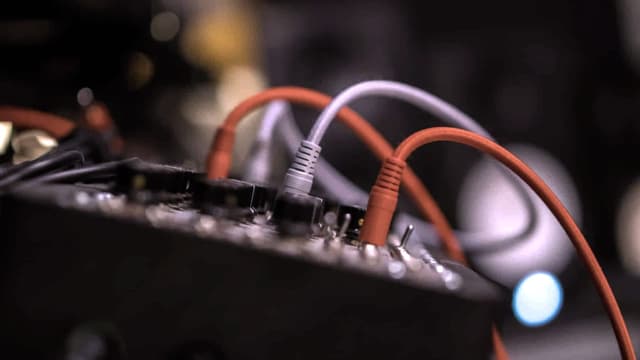
Synth Oscillators and Waveforms
Part two: the oscillator is where every synth sound starts. What it does, how sine, triangle, square and sawtooth waves differ, and why the number of oscillators changes what a synth is good for.
Read →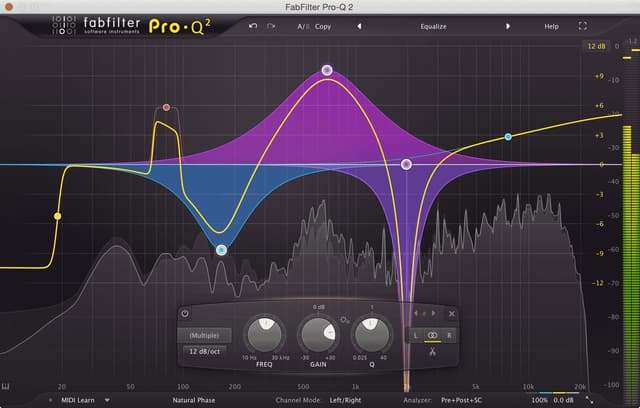
Synth Filters Explained
Part three: the filter is what shapes a raw oscillator tone into a sound. Low pass, high pass, band pass and notch filters, plus cutoff, resonance and filter slope.
Read →
Synth Envelopes and ADSR
Part four: envelopes shape how a sound behaves over time. How the amplifier stage works, what envelope generators do, and the four phases of ADSR.
Read →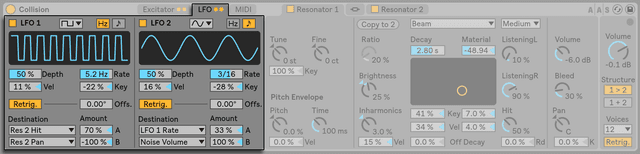
Synth Modulation, LFOs and Velocity
Part five: modulation is what turns a static patch into a living sound. Modulation sources and destinations, hardwired versus modular routing, velocity control, LFOs and portamento.
Read →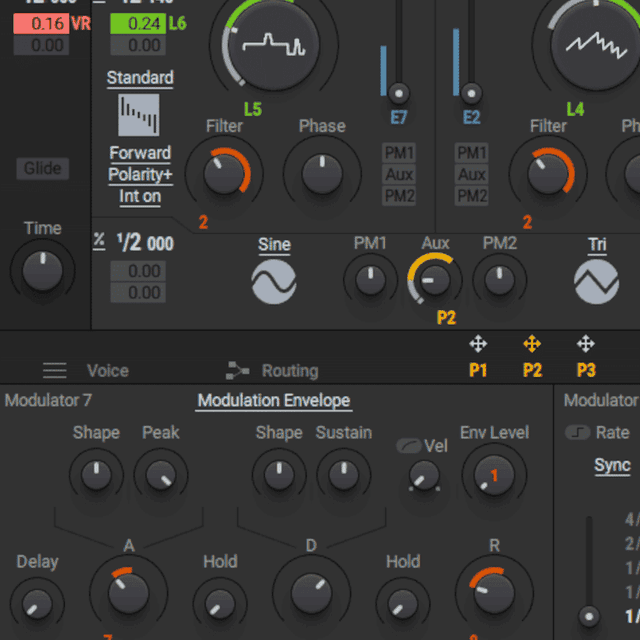
An Introduction to NI Massive
Part six: putting the theory to work in Native Instruments Massive. Its oscillators, the centre window, modulation routing, envelopes, and the LFO, Stepper and Performer modulators.
Read →
Music Copyright Explained
The music industry runs on copyright. What intellectual property actually is, what rights a copyright grants, how long they last, where they came from, and how they differ country to country.
Read →
How Music Publishing Works
Where music publishing came from and what a publisher actually does - from printed manuscripts through performing and mechanical rights, to whether a songwriter needs a publisher at all.
Read →
Performing Rights and the PRS
Every time a song is played on radio or performed live, someone should be paid for it. How the Performing Right Society collects that money, and how it splits between writer and publisher.
Read →
Music Publishing Contracts Explained
What you are actually agreeing to in a publishing deal: minimum delivery commitments, advances and royalty splits, exclusivity, territory, and what a 360 deal changes.
Read →
Music Publishing and Copyright: A Glossary
A plain-English reference for the terms that come up in publishing and copyright deals - advances, cross-collateralisation, recoupable costs, song splits, top-line, public domain and the rest.
Read →
Starting a Mix from Scratch
Before you touch a fader, zero the desk. Why starting from a known-neutral state matters, and how to subgroup drums, vocals and the rest so the mix stays manageable.
Read →
How to Build and Reference a Mix
Where to start a mix, why listening to the whole track beats soloing every channel, and how referencing against a record you know stops you losing your bearings.
Read →
Panning and the Stereo Field
How stereo actually works and what to do with it: where bass, lead vocals and backing vocals belong, the trap of over-wide pseudo-stereo, and why mono compatibility still matters.
Read →
Using Reverb in a Mix
Reverb, instrument by instrument: how much to put on snare, toms, hats, percussion and kick, spring and plate treatments for guitars, and how to create a sense of space without washing the mix out.
Read →
Simple Tips to Get Your Mixing Off to A Quick Start
You’ve completed your recordings and now it’s time to put them all together. If you ask any experienced mixing engineer, they will tell you that they have a system they use every time they want to mix a project.
Read →
360-Degree Video Footage Of A Class
Samsung asked us if we'd like to borrow one of their prototype 360-degree cameras. We said yes and it didn't take us long to decide what to do with it! It's sphere-shaped device with a front and back lens.
Read →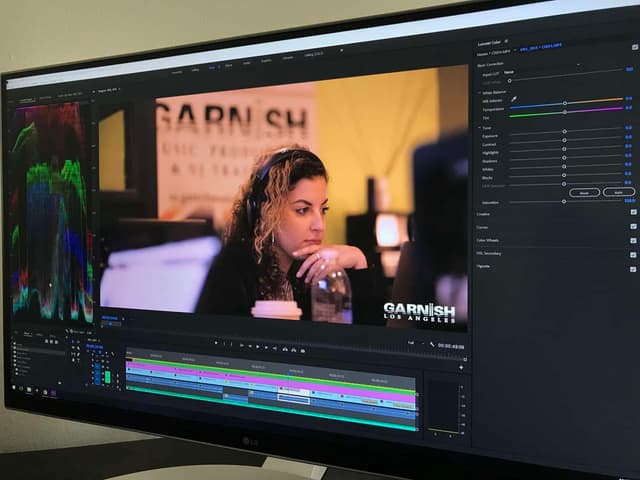
Music Video Ideas for Artists — That Aren’t Music Videos
Did you know that YouTube traffic makes up nearly a ⅕ of ALL internet traffic? Similarly, quite a bit of that is music consumption. It’s also common for labels to upload an audio tracks as video for YouTube,
Read →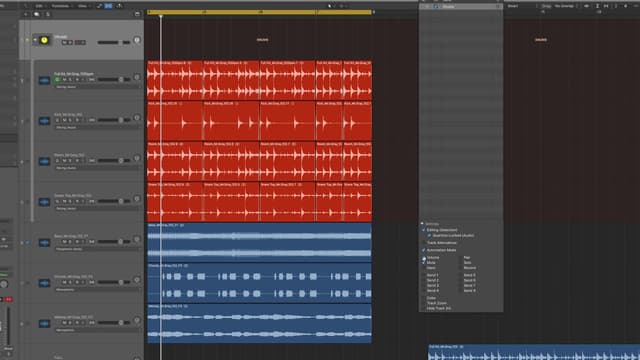
How to Compress Drums
The sound of modern drums in rock, pop, and electronic music very rarely embodies the natural range that acoustic drums are capable of. This is most often due to the application of compression, adding punchiness, energy and consistency to a drum track.
Read →
Skills Every Musician Should Know
Whether you’re a budding producer, DJ or a brand new indie artist -- most of the time the focus is purely on the music, and that’s about it. However, soon enough, you’ll realize that there’s much more involved in just putting on music.
Read →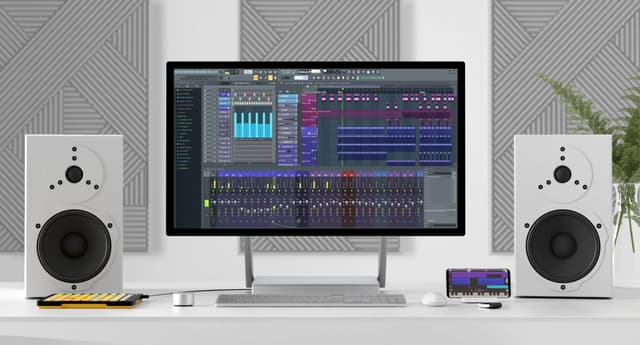
DIY Home Recording Studio Tips
As early as 2010, if you wanted to put together an album you were pretty much forced to shell out cash to a local recording studio. Or, even worse, you pretty much needed a record deal with a label of some sort.
Read →
Understanding Reverb
Reverb is one of the most widely used time based effects in audio, and one of the most fascinating. Depending on how you use it, it can help or hinder your mix. Luckily, many parameters on reverb plugins are the same or similar, and can be explained across platforms. Understanding reverb is importan
Read →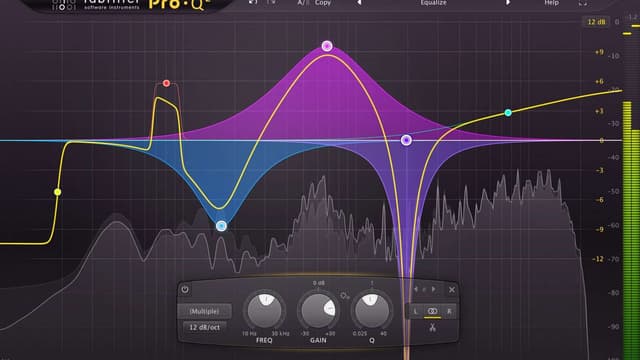
5 Mixing Mistakes to Avoid
by Katie Gilchrest When it comes to mixing, establishing a balance is one of the most important parts of creating a professional sounding production. Some of the same miscalculations are made again and again, and fortunately there are ways to recognize, avoid and fix them. Here are five common mixin
Read →
How To Improve Bass In Music
How To Improve Bass In Music Bass can be a very complicated part of your mix. Actually, we’d even go and say that the majority of home-producers or home-recorded work, don’t have a good low-end, which is really the basis (get it, bass-is?) for any mix. In this article, we look at how to improve bass
Read →
How to EQ Vocals
How to EQ Vocals Katie Gilchrest's guidelines on how to EQ vocals. For most styles of music, vocals are one of the most important parts of the mix. Poorly EQd vocals can cause detriment and distraction to an otherwise great song. Equalization using a parametric EQ is a tool that can allow vocals to
Read →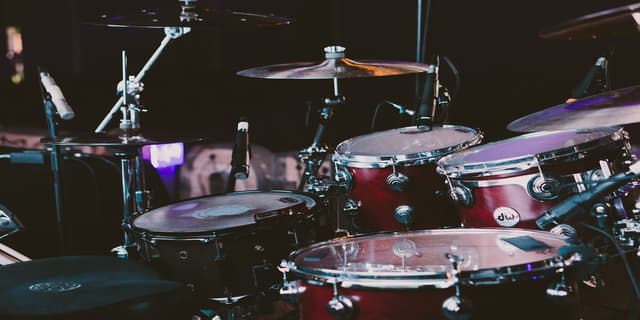
Drum Miking Techniques
Drum Miking Techniques: Recorder Man and Glyn Johns Katie Gilchrest's take on drum miking techniques Many considered the drum set one of the hardest pieces of equipment to mic in a studio. A drum kit is not one instrument, but a collection of multiple instruments, featuring a wide variety of differe
Read →
Microphone Polar Patterns for Beginners
by Katie Gilchrest Understanding how microphones “hear” is the first step in learning how to mic instruments properly. The directionality of a microphone is commonly explained as a polar pattern, and microphone use in the studio, as well as live settings vary based on each one. Understanding microph
Read →
Recording While Traveling
A harmonious combination; new places, new people, new ideas and new sounds in different lands that present their own rhythms and culture can stir up something good in a natural and genuine way when recording while traveling. The perfect time to try new things, tune your ear, hone your craft, become
Read →