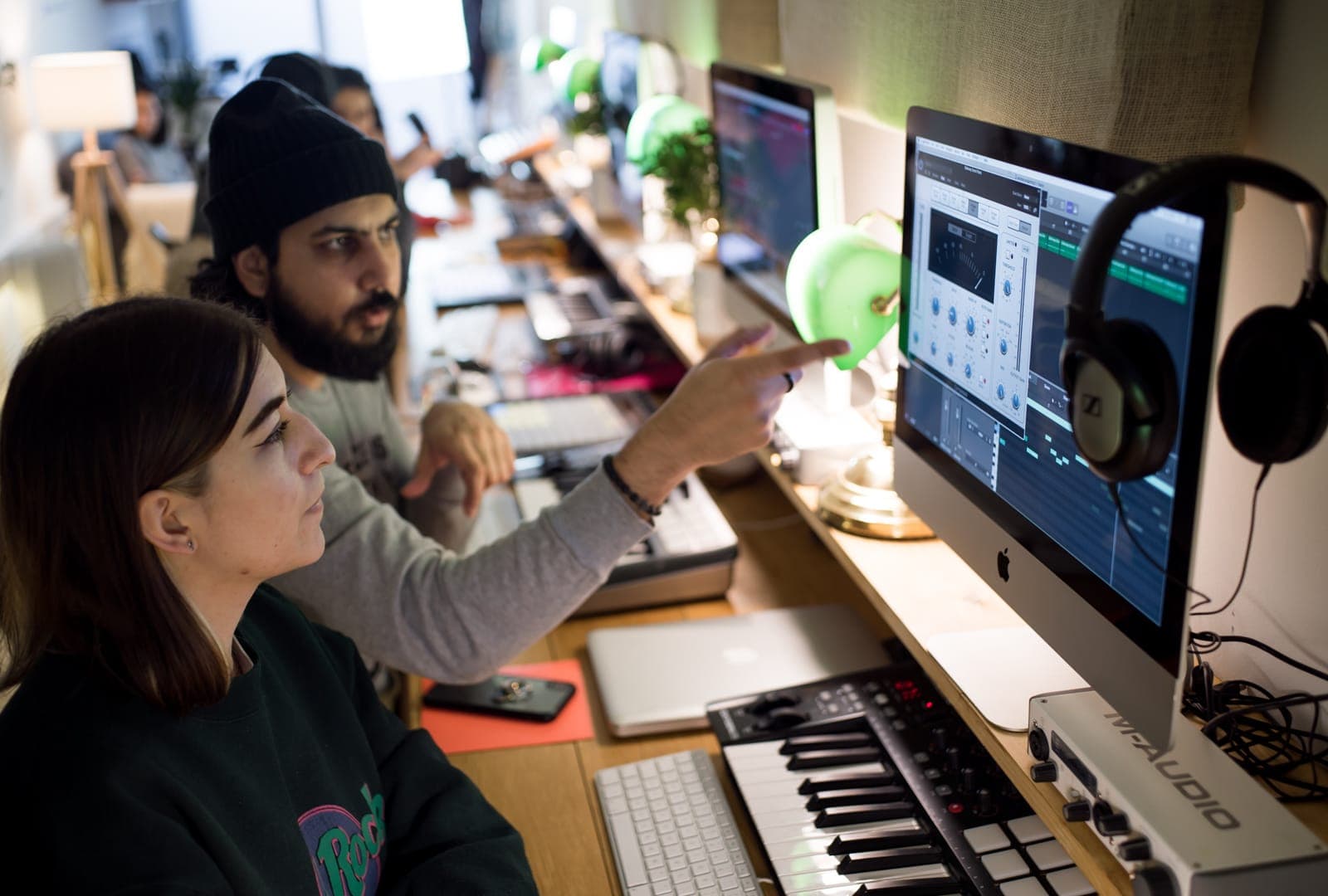
Certified Pop Music Producer Program
Certified Pop Music Producer Program
Crafted for the next wave of Pop, Singer/Songwriter, Hip-hop, and all Live Music producers, to take them from fiddling around in Garage Band, to producing professional sounding songs, using a laptop and Logic Pro. More experienced producers also take this program to fill in gaps in workflow.
Learn Logic Pro like a Pro! And all the add-ons included in this incredibly powerful and comprehensive DAW, from the ground up, leaving no stone unturned, ensuring you know how to use the tools included effectively and efficiently, to produce music at the quality you're used to hearing by your favorite artists.
Logic Pro DAW
- →What Is Logic Pro?
- →More about the Main Window
- →Playback and Navigation
- →Projects - The Basics
- →Create tracks in a project
- →Working with Regions
- →Recording Software Instruments
- →Making Beats using Apple Loops
- →The Chord Track
- →Session Players
- →Making Beats In Step Sequencer
- →Live Loops
- →Arrangement, Global Tracks and Sharing
- →Automation
- →Introduction to Audio Effects in Logic
- →Sampling: History & Copyright Laws
- →Sampling in Logic Pro X
- →Flex Time
- →Audio FX 2
- →Recording Audio
- →Flashback Capture
- →Comping
- →Editing Audio & Managing Projects
- →Stem Splitter
- →Audio FX 3
- →Audio FX 4
- →Side chain and Ducking
- →Folders and Track Stacks
- →Intro to Mixing
- →Key commands
Logic Producer
- →Sampling: Quick Sampler
- →Sampling: Sampler
- →Synthesis: Introduction
- →Synthesis: Logic Synths
- →Synthesis: Logic Synths pt II
- →MIDI FX
- →Step Sequencer: Beyond the Grid
- →Recording: Smart Tempo & Track Alternatives
- →Flex Pitch, Quantizing Audio & Varispeed
- →Selection-Based Processing
- →Working with Video
- →Logic Remote
- →Scales, Chords, Keys and Harmony
- →Chord ID and Region Chords
- →Session Players: Editing the Performance
Mixing & Mastering
- →Choosing Monitors
- →Monitor Placement
- →Acoustics: The Basics
- →Signal Flow
- →Mixing Desk Basics
- →Basic panning techniques
- →Mid/Side and Stereo Width
- →Equalization
- →Filtering
- →Dynamics
- →Reverb
- →Delay
- →Phaser and Flanger
- →The Vocoder
- →Modulation
- →Vocals
- →Automation: Mixing as a Performance
- →More Creative Mixing Techniques
- →Mixing Electronic Music
- →Mastering
Mentoring
- →20 hours of working on your music in class!
Working in small groups in this class will fast-track you to writing and producing the music you love.

What our students say.
“I've played with software for a couple of years and thought I got most of it down, but I was wrong. I would definitely recommend this course to anybody wanting to learn the production side of music. It was incredibly helpful, and left me inspired to make tracks 24/7. Great course!”
Kristina Bialkowski
Ableton certified; Apple authorized; world-class facilities; superior roster of instructors.
120 hours or 80 hours 1:1
USA: $4,999 + $100 registration fee
Instructors



Questions we hear a lot.
120 hours, combining hands-on learning with group mentoring.
A completed track you can show off, plus your certificate, if you keep up with the work between sessions.
$4,499 plus a $100 registration fee.
No - it's specifically designed to take you from GarageBand up to producing professional-sounding songs in Logic Pro.
Access to premium synths and samples through licensing partnerships, plus Garnish's boutique sample label - including an exclusive Mark Ronson Mellotron pack.
Yes - in-person or Live Online.
Ready to get started?
InquireWhat makes Garnish different?
Session Players: Editing the Performance
Adding a Session Player is covered in the Logic Pro course. This is where you stop taking what you are given and start directing the player. Double-click…
Read →Region Inspector Float in Logic Pro
Logic Pro's Region Inspector Float edits gain, transpose, quantize, velocity and more from a floating window - without hunting through menus.
Read →Synthesis: Logic Synths pt II
Logic’s Synthesizer collection doesn’t just have the classic “synth” type sounds, there’s much more Synthesis in Logic asides from trying to sound like a…
Read →MIDI FX
MIDI stands for Musical Instrument Digital Interface and is a a means of communication between two or more suitably equipped electronic musical…
Read →Scales, Chords, Keys and Harmony
We can define a scale as a progression of notes in an ascending or descending order. If you play the note C on a keyboard, and ascend through the next…
Read →Audio FX 3
You can use reverb effects to simulate the sound of acoustic environments such as rooms, concert halls, caverns, or an open space.
Read →