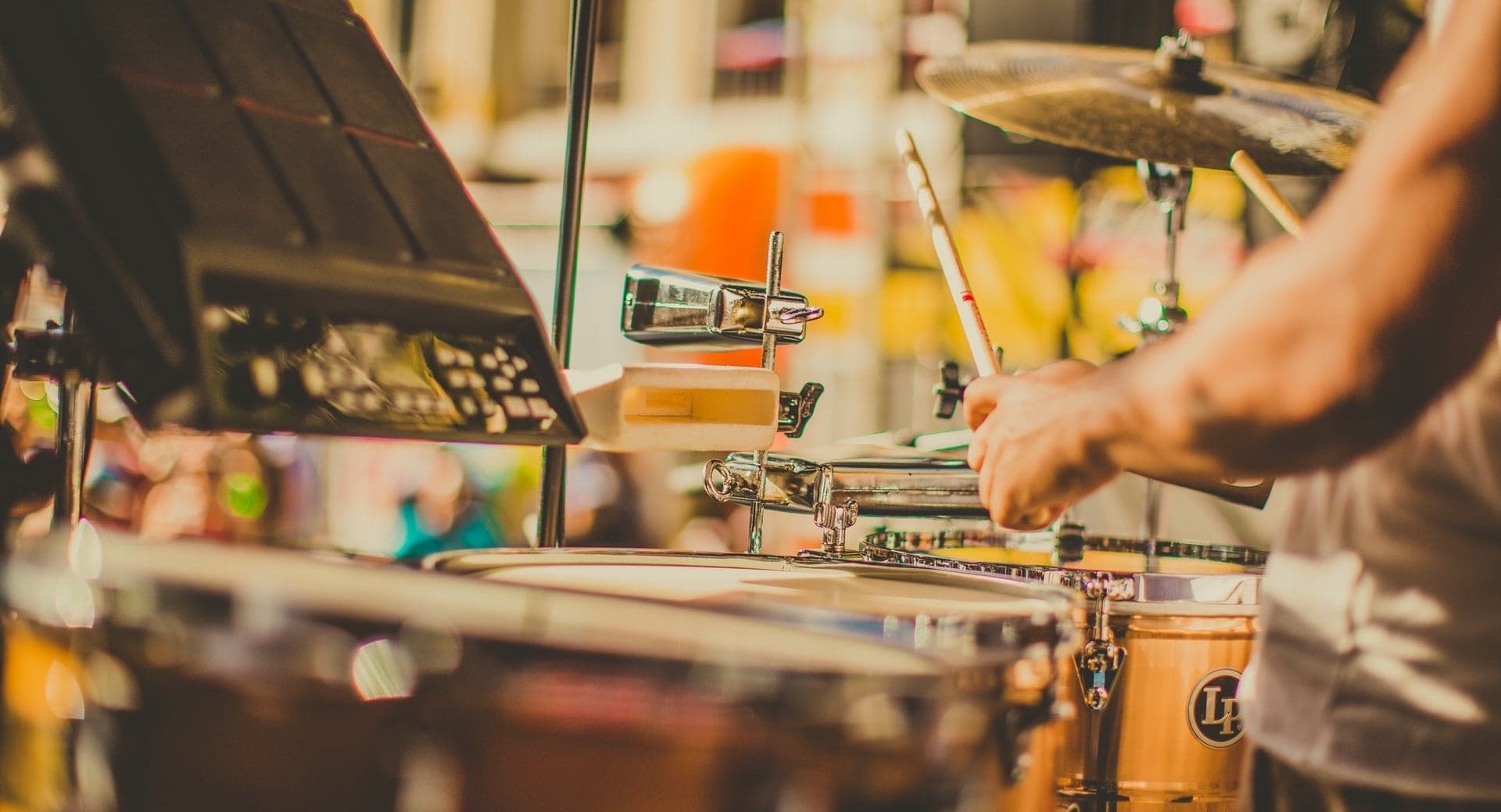
Rhythm Section Programming
Rhythm Section Programming
- →Guitar and Bass: Elevate your stringed instrument programming to new heights. Learn techniques to infuse your guitar and bass parts with musicality, creating layers that complement and enrich the overall sound.
- →Session Musician Secrets: Peek behind the curtain of top session musicians. Understand how they approach their instruments, picking up invaluable tips to infuse your production with the finesse and expression that sets the pros apart.
- →Rhythm Section Mastery: Uncover the secrets of the rhythm section—the backbone of your beat. Master the essential building blocks that bind your music together, creating a solid foundation that propels your compositions forward.
- →Drumming Insights: Step into the mindset of a drummer. Explore the art of crafting realistic drum patterns and fills that groove with authenticity, adding a rhythmic heartbeat to your music.
This course is available live online, taught in real time by Garnish instructors from across our network of campuses, in the same small-group format as our in-person classes, using our specialist music collaboration software, Muse.
Questions we hear a lot.
Programming drums, bass and guitar parts that sound like players - the techniques session musicians use, applied in your DAW.
No. You will learn how top session musicians approach their instruments so you can program convincing parts without playing them.
Use the Connect button on this page to request the current schedule and price; one of our placement team will reply within a business day.
The principles apply in any DAW; bring the one you produce in.
Yes, taught live with feedback on your own programming.
Ready to get started?
InquireWhat makes Garnish different?
Drum Miking Techniques
Drum Miking Techniques: Recorder Man and Glyn Johns Katie Gilchrest's take on drum miking techniques Many considered the drum set one of the hardest pieces of equipment to mic in a studio. A drum kit is not one instrument, but a collection of multiple instruments, featuring a wide variety of differe
Read →How to Compress Drums
The sound of modern drums in rock, pop, and electronic music very rarely embodies the natural range that acoustic drums are capable of. This is most often due to the application of compression, adding punchiness, energy and consistency to a drum track.
Read →How To Improve Bass In Music
How To Improve Bass In Music Bass can be a very complicated part of your mix. Actually, we’d even go and say that the majority of home-producers or home-recorded work, don’t have a good low-end, which is really the basis (get it, bass-is?) for any mix. In this article, we look at how to improve bass
Read →Understanding Reverb
Reverb is one of the most widely used time based effects in audio, and one of the most fascinating. Depending on how you use it, it can help or hinder your mix. Luckily, many parameters on reverb plugins are the same or similar, and can be explained across platforms. Understanding reverb is importan
Read →How to EQ Vocals
How to EQ Vocals Katie Gilchrest's guidelines on how to EQ vocals. For most styles of music, vocals are one of the most important parts of the mix. Poorly EQd vocals can cause detriment and distraction to an otherwise great song. Equalization using a parametric EQ is a tool that can allow vocals to
Read →DIY Home Recording Studio Tips
As early as 2010, if you wanted to put together an album you were pretty much forced to shell out cash to a local recording studio. Or, even worse, you pretty much needed a record deal with a label of some sort.
Read →