FL Course | Worldwide
FL Studio Course
Build Beats. Shape Sound. Finish Tracks.
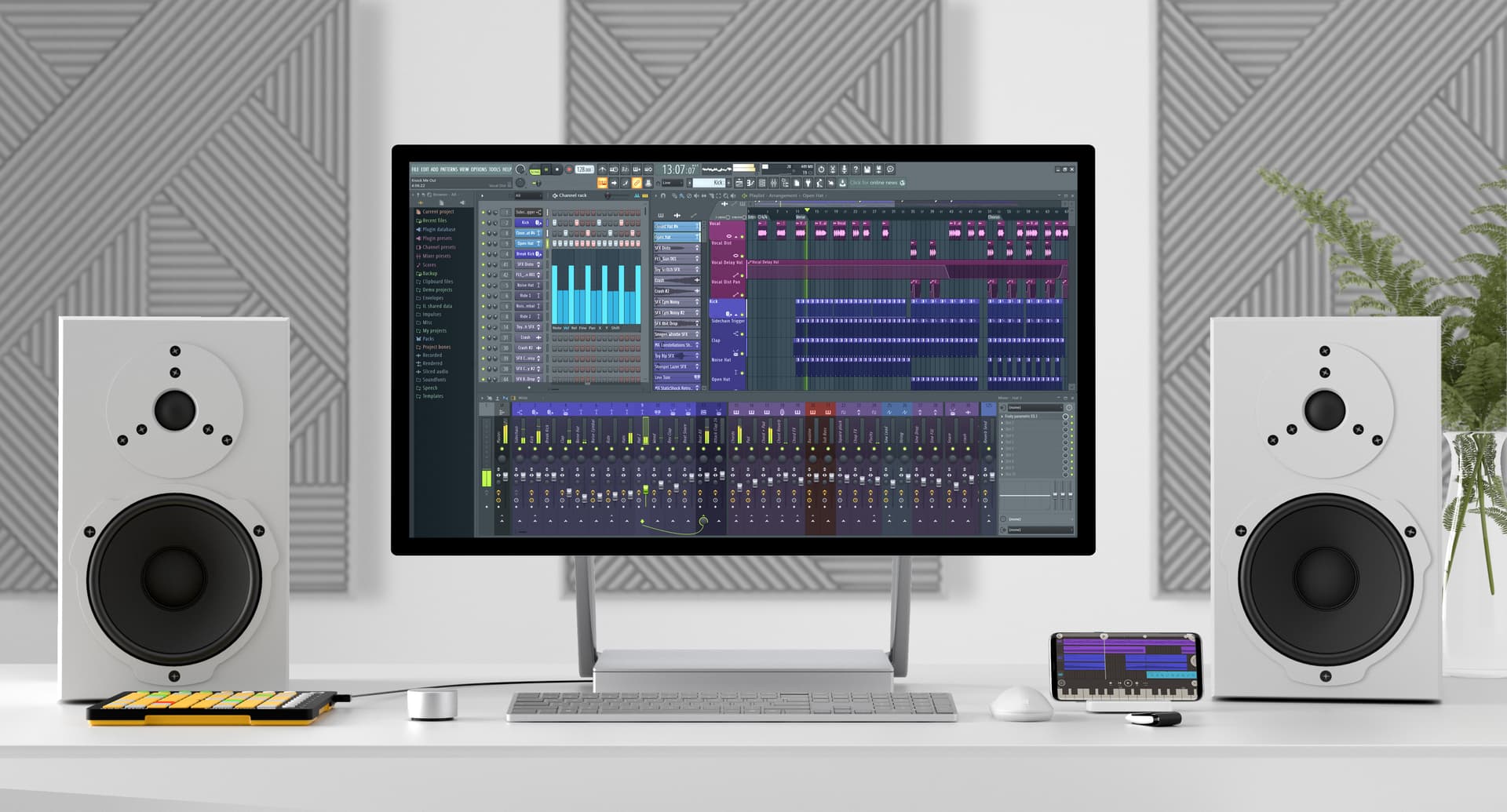
FL Studio has become a go-to DAW for electronic music producers and beat-makers around the world—but whatever your genre, if FL is your weapon of choice, and you want your name on this list of notable users, this course will give you the tools and confidence to have the best chance.
Main Menu Bar
- →File Menu
- →Edit Menu
- →Add Menu
- →Patterns Menu
- →View Menu
- →Options Menu
- →Tools Menu
- →Help Menu
Toolbar
- →Editing the Toolbar
- →Main Menu
- →Title & Hint Panel
- →Transport Panel
- →CPU & Memory Panel
- →Global Snap Panel
- →Output Panel
- →Online Panel
- →Pattern Panel
- →Shortcut Icons
- →Time Panel
- →Multilink Controllers Icon
- →Main Volume & Pitch Panel
- →Window Controls
File Browser
- →Plugin Database
- →Project Browser
- →Advanced folder stuff
Channel Rack & Step Sequencer
- →Channel Button Menu
Channel Settings
- →Main Control
- →Sampler Setting
- →Instrument Setting
- →Miscellaneous Setting
- →Automation Clip Setting
- →Layer Setting
- →Plugin Window Setting
Piano Roll
- →Piano Roll Arpeggiator
- →Piano Roll Articulator
- →Piano Roll Chopper
- →Piano Roll Claw Machine
- →Piano Roll Flam Tool
- →Piano Roll Flip Tool
- →Piano Roll LFO Tool
- →Piano Roll Key Limiter Tool
- →Piano Roll Menu
- →Import MIDI Data Dialog
- →Piano Roll Quantizer
- →Piano Roll Randomizer
- →Riff Machine
- →Piano Roll Scale Level Tool
- →Piano Roll Strum Tool
Playlist
- →Patterns
- →Audio Clips
- →Automation Clips
- →Performance Mode
Instrument / Generator Plugins
- →We explore all the instruments FL studio has to offer, which are too many to list here!
Mixer & Mixing
- →We dive deep into the vast mixing tools that come with FL Studio, which are too many to list here!
Recording: Audio, Notes & Automation
- →Audio Recording
- →Audio Interfaces (USB Microphones)
- →Note Recording
- →Note Step Entry
- →Automation Recording
- →Linking USB/MIDI Controllers
- →MIDI Scripting
- →Preconfigured Controllers (USB/MIDI)
- →Linking Internal Controller Plugins
- →Mapping Formula
- →Automation Clips
- →Automation Event Editor
- →LFO Tool
- →Scale Levels Tool
- →Import MIDI Data Tool
Edison Wave Editor & Recorder
- →Edison: Sample Properties
- →Edison: Amp Tool
- →Edison: Blur Tool
- →Edison: Convolution / Reverb Tool
- →Edison: Claw Machine Tool
- →Edison: Drum Tool
- →Edison: Equalize Tool
- →Edison: Noise Removal Tool
- →Edison: Script Tool
- →Edison: Time Stretch / Pitch Shift Tool
- →Edison: Tune Loop Tool
ReWire Support
- →Client Mode
- →Host Mode
Installing & Using VST / AU Plugins
- →FL Studio as a Plugin (VST / AU)
Whether you're a complete beginner or already making tracks in FL, this 36-hour course delivers deep, structured training in music production, beat-making, and engineering. We cover every major element in detail, packed with real-world tips and techniques that even experienced users find game-changing. You’ll leave with a solid workflow, polished production skills, and a competitive edge over anyone stuck in YouTube rabbit holes.
Classes are live and interactive—in-person or live online—so you can ask questions and get feedback in the momentwhen you're inspired... or confused. It’s this kind of immediate, practical support that makes in-person learning so effective.
This course is available live online, taught in real time by Garnish instructors from across our network of campuses, in the same small-group format as our in-person classes, using our specialist music collaboration software, Muse. Discover qualities that distinguish us, here.
Questions we hear a lot.
36 hours, live online, covering the full path from building beats to finishing tracks.
No. The course works for complete beginners and for producers already making tracks in FL who want deeper, structured knowledge.
Use the Connect button on this page to request the current schedule and price; one of our placement team will reply within a business day.
It is a go-to DAW for electronic producers and beat-makers, but the course applies to whatever genre you make - production principles are the same.
A computer running FL Studio and a reliable internet connection for the live sessions.
Ready to get started?
InquireWhat makes Garnish different?
What Are MIDI Interfaces?
All about MIDI The MIDI (Musical Instrument Digital Interface) standard has had a profound impact on the music industry since its introduction in the early 1980s. MIDI allows electronic musical instruments, computers, and other digital equipment to communicate with each other, allowing for the creat
Read →Sampling Frequencies & Bit Rates: 96 v 44.1Khz & 24 v 16bit
Sampling Frequencies & Bit Rates: 96 v 44.1Khz & 24 v 16bit by Stephen Powell I had a conversation recently with a guy who described himself as a “glitch-dubstep-lo-fi composer” He went on to describe a couple of his tracks which turned out to be pretty much what you might expect from such a descrip
Read →Antares Autotune pitch correction software on Xfactor shows
Antares Autotune pitch correction software on Xfactor shows: I had a chap called Will Payne from the Sunday Mirror contact me and ask if I could spot any Antares Auto-tune pitch correction software on Susan Boyle's pre-recorded audition performance of 'I Dreamed a Dream' on Britain's Got Talent, whi
Read →Which DAW is better – Logic, Pro Tools, FL, Ableton or Cubase?
When I very first started in the early-nineties, we all used Atari STs with a whole 512k of Ram for sequencing MIDI and not much else. All the audio was dealt with using 24 track 2" tape, with up to 3 slaved together synchronised using lynx synchronisers. Back then for sampling, we had the classic A
Read →5 Mixing Mistakes to Avoid
by Katie Gilchrest When it comes to mixing, establishing a balance is one of the most important parts of creating a professional sounding production. Some of the same miscalculations are made again and again, and fortunately there are ways to recognize, avoid and fix them. Here are five common mixin
Read →Simple Tips to Get Your Mixing Off to A Quick Start
You’ve completed your recordings and now it’s time to put them all together. If you ask any experienced mixing engineer, they will tell you that they have a system they use every time they want to mix a project.
Read →